
Vail Valley Winter Prep
Attic Mold in Mountain Homes: Why It Shows Up After the First Cold Snap
Two weeks into heating season, warm indoor air is meeting a frozen roof deck in Vail attics, and mold follows. This guide explains where the moisture comes from, what to check in the attic this week, what can be cleaned, and when it needs remediation under containment.
- 24/7 emergency response
- IICRC-certified technicians
- Insurance claim documentation
- Vail Valley + Eagle County
In this guide
- Local risks specific to mountain properties
- Practical first 60 minutes after damage
- When to call DRS instead of going DIY
Vail’s furnaces have been running for two weeks now. The first cold snap of the season hit in mid-October with the first winter weather advisory and freeze warnings, last week’s storm brought more snow down toward 10,000 feet, and there is more in the forecast this week while the mountain makes snow ahead of its November 13 opening. Heating season is here, and so is the season when attic mold appears in mountain homes. It shows up as a gray or black bloom on the underside of the roof deck, usually on the north side first, in a home that had no mold problem in September. If that is what you are looking at, this guide explains why it happens, what to check, and when it needs attic mold remediation rather than a can of spray.
DRS is based in Eagle County and sees this pattern every winter in Vail homes of every age. The cause is almost always the same, and it is not the roof.
Why attic mold shows up after the first cold snap
Warm indoor air holds moisture. In a Vail home in winter, the air inside is 65 or 70 degrees and the roof deck is below freezing. Any path that lets indoor air into the attic, a gap around a bathroom fan, a recessed light, an attic hatch, the top plate of an interior wall, carries that moisture up with it. When the warm air touches the cold underside of the roof sheathing, the moisture condenses, and on the coldest nights it frosts. The frost melts during the day, the sheathing stays damp, and mold starts within a couple of weeks. It needs no leak. The water comes from inside the house.
Mountain homes make it worse in a few ways:
- Tight construction and high humidity. Newer homes hold heat well and hold moisture well. Humidifiers, which run hard in Vail’s dry winter air, add to the load.
- Bathroom fans vented into the attic. It is a common shortcut in remodels. Every shower sends a cloud of steam onto the sheathing.
- Blocked soffit vents. Blown-in insulation that was pushed into the eaves, or ice and snow on the soffits, stops the airflow that would carry moisture out.
- Snow on the roof. A snow-covered roof is colder and better insulated from the sun, so the deck stays below the dew point longer. It is also where ice dams start later in winter, which is the same heat-loss problem viewed from outside.
What to check this week
- Go into the attic on a cold morning. Bring a flashlight and look at the underside of the sheathing, especially on the north slope and around the nails. Frost on the nail tips, or dark rings around them, is the first sign.
- Look for staining and growth. Gray, green, or black blotches on the plywood or OSB. Early growth looks like dust. Established growth looks like a shadow.
- Find the bathroom fan ducts. Follow each one. It should run to a roof or wall cap, not end in the insulation.
- Check the soffits from inside. You should see daylight or feel air at the eaves. If the insulation is packed into the corner, the vents are blocked.
- Check the attic hatch. Weatherstripping and insulation on the hatch stop one of the biggest air leaks in the house.
- Read your humidistat. Indoor humidity above about 35 percent when it is below 20 degrees outside will condense on cold surfaces. Turn the humidifier down as the temperature drops.
What can be cleaned and what needs remediation
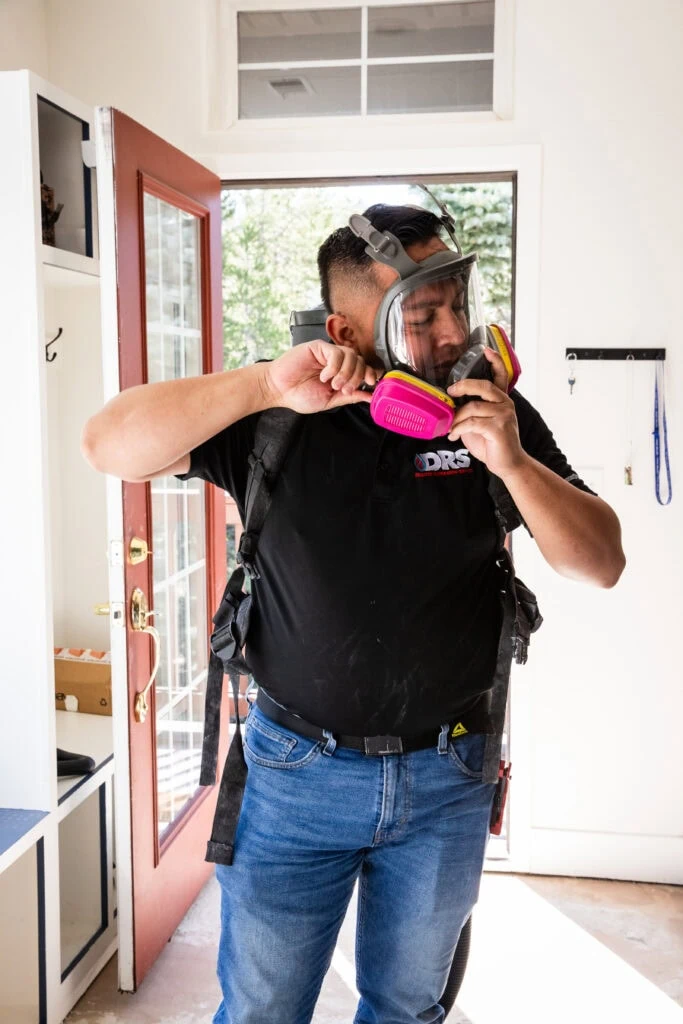
A light haze of growth on a few square feet of sheathing, caught early, can sometimes be cleaned by a homeowner with the right protective equipment and the moisture problem fixed at the same time. Anything larger, anything that has darkened the wood, anything that is back for a second winter, or any attic you cannot safely move around in should be handled under containment. Attic work stirs up spores, and the attic is connected to the rest of the house by every gap that let the moisture up in the first place. Spraying bleach on a roof deck adds water to the wood and does not reach the growth in the grain.
What DRS does on site
Our crews respond across Eagle County 24/7. An attic mold job in Vail typically includes:
- Moisture readings on the sheathing and framing, and a check of each fan duct and vent path, so the cause is documented along with the damage
- Containment at the attic access and negative air so spores stay in the attic during the work
- HEPA vacuuming and treatment of the sheathing and rafters, with abrasive cleaning where staining has set in
- Removal of insulation that is wet or contaminated
- A written scope for your insurer, and a clear list of what needs fixing so it does not come back: fan venting, air sealing, soffit baffles, humidifier settings
- Post-remediation verification by an independent professional
Common mistakes Vail homeowners make
- Calling the roofer first. Winter attic mold is almost never a roof leak. The roofer finds nothing and the mold stays.
- Adding insulation without air sealing. More insulation makes the attic colder, and the moist air still gets through. The condensation gets worse.
- Running the humidifier at a summer setting. Comfortable for the people, bad for the roof deck.
- Waiting until spring. The attic stays wet all winter. By April the growth has spread and the sheathing may be delaminating.
When to call a pro versus handle it yourself
Checking the attic, following the fan ducts, and turning down the humidifier are jobs for this weekend. Growth that has spread across the sheathing, a second-winter problem, or any attic where you cannot find the moisture path needs a crew that can clean it safely and tell you exactly what to fix.
If the first cold snap left mold on your roof deck, we can take care of it before ski season. See how we serve Vail or request a free inspection.
Why DRS for Vail Valley Properties
Local mountain team
Crews based in Eagle County who know how snowmelt, freeze-thaw cycles, and vacation-home patterns drive damage in the Vail Valley.
24/7 dispatch
Emergency response any hour, any day. We mobilize to stabilize, mitigate, and document damage as soon as we arrive on site.
Insurance documentation
Photos, moisture readings, scope of work, and reports your adjuster needs to move the claim forward without delays.
Core Restoration Services
Water, fire, smoke, and mold restoration for homes, condos, rentals, and mountain properties throughout the Vail Valley and Eagle County.
Emergency Services
Emergency response, damage stabilization, and fast dispatch when a property loss cannot wait.
View serviceWater Damage Restoration
Water extraction, structural drying, moisture monitoring, and mitigation after leaks, pipe bursts, and flooding.
View serviceFire Restoration
Cleanup for smoke, soot, and fire-related damage with a clear path from emergency response to reconstruction planning.
View serviceMold Restoration
Targeted mold remediation and moisture control to protect indoor air quality and reduce recurrence.
View serviceAreas We Serve
Tap a town to see local restoration support, common issues we see in the area, and how to reach DRS fast.
Frequently Asked Questions
Why is there mold in my attic if the roof does not leak?
In winter the moisture comes from inside the house. Warm, humid indoor air leaks into the attic through gaps around fans, lights, and the hatch, condenses on the cold underside of the roof deck, and keeps the wood damp. Mold grows on the damp sheathing without any roof leak.
Can I clean attic mold myself?
A light haze on a small area, caught early, can sometimes be cleaned by a homeowner with a respirator, gloves, and eye protection, provided the moisture path is fixed at the same time. Larger or darker growth, growth that has returned, or an attic that is hard to move around in should be done under containment by a certified crew.
Does homeowners insurance cover attic mold?
Often not. Many policies exclude mold that results from condensation or long-term moisture, while covering mold that follows a sudden event such as a burst pipe. Check your policy and ask your agent. DRS documents the cause and the scope either way.
How do I stop attic mold from coming back?
Fix the moisture path: vent bathroom fans outside, seal air leaks at the ceiling plane and attic hatch, keep soffit vents clear with baffles, and run indoor humidity around 30 to 35 percent or lower on the coldest days. Remediation without those fixes usually means another round next winter.
Mold on the Roof Deck in Vail?
DRS remediates attic mold under containment, documents the moisture path, and verifies the result with an independent professional. Free estimates, 24/7 across Eagle County.