
DIY Guide
Water-Damaged Drywall
Water damage can wreak havoc on your home, especially when it affects drywall. Left untreated, it can lead to unsightly stains, structural problems, and even dangerous mold growth.
The good news? With the right guidance, many drywall repairs are manageable as a DIY project. This step-by-step guide will show you how to assess the damage, make repairs, and prevent mold. And when the problem is bigger than a DIY fix, Disaster Restoration Services (DRS) is available 24/7 to help with professional restoration.
Understanding Water Damage in Drywall
Drywall is highly absorbent, which makes it especially vulnerable to water. Identifying the cause of the damage is the first step toward a lasting solution.
Common causes of drywall water damage include:
-
Leaking or burst pipes
-
Roof leaks
-
Window and door leaks
-
Poor drainage or flooding
Early warning signs to watch for:
-
Brown or yellow discoloration
-
Peeling or bubbling paint
-
Bowed, bulging, or warped surfaces
-
Musty odor (a sign of mold behind the wall)
Pro Tip from DRS: Use a moisture meter if possible. It helps confirm whether your drywall is damp inside, not just on the surface.
DIY GUIDE
Safety First: Preparing for Drywall Repair
Before grabbing your tools, prioritize safety. Water-damaged drywall often hides mold spores and sharp debris.
Protective gear checklist:
-
Gloves (to protect your hands)
-
N95 mask or respirator (to block dust and spores)
-
Safety goggles (to shield your eyes)
Also, ensure your workspace is well-ventilated. Fans and open windows help reduce dust and improve air quality.
If you suspect extensive mold growth, stop and call professionals like DRS. Mold remediation requires specialized equipment and training.
Step 1: Identify and Stop the Source of Water
There’s no point repairing drywall if water is still getting in.
-
Shut off your home’s main water supply if plumbing is the culprit.
-
Inspect roofs, windows, and exterior walls for leaks.
-
Fix or patch the source of the leak before moving forward.
Step 2: Assess the Extent of the Damage
Not all water damage is equal. Some drywall can be dried and saved, while heavily saturated sections must be removed.
-
Use a moisture meter to check levels inside the wall.
-
Look for discoloration, peeling paint, or swelling.
-
Notice any musty smells as they often point to hidden mold.
Call DRS if: More than a small section is affected, or if water has soaked studs, insulation, or multiple walls.
Step 3: Remove Damaged Drywall and Clean the Area
Once you have identified damaged areas:
-
Use a utility knife or drywall saw to cut out the damaged section.
-
Cut at least 2 inches beyond visible damage to ensure you remove all compromised material.
-
Wear gloves and a mask during removal.
-
Dispose of the debris properly to prevent mold spread.
Cleaning:
-
Wipe down exposed studs and surrounding areas with a mild detergent or mold cleaner.
-
Keep ventilation strong to help the area dry out.
Step 4: Dry Out the Area Completely
Patience is critical here. Any leftover moisture can cause mold or make new drywall fail.
-
Run fans and dehumidifiers for several days.
-
Open windows if weather allows.
-
Use a moisture meter to confirm the area is fully dry before proceeding.
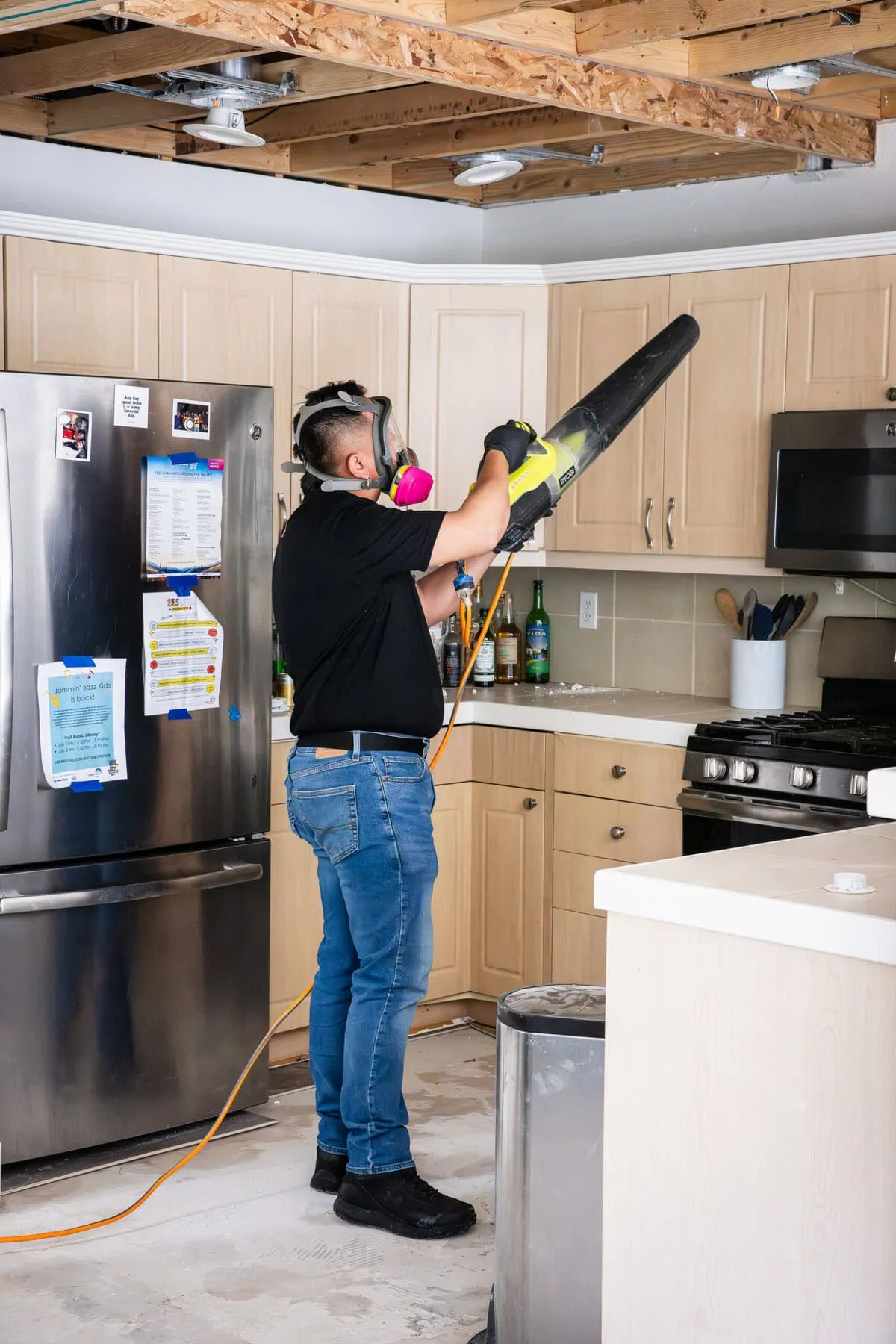
Pro Tip from DRS: Professional-grade drying equipment can remove hidden moisture faster and more thoroughly than household fans. For major leaks, that difference matters.
Step 5: Install and Secure New Drywall
Once the area is dry:
-
Measure the opening and cut a new piece of drywall to size.
-
Secure it to studs using drywall screws or nails.
-
Ensure the new drywall sits flush with the existing wall.
Step 6: Finish, Prime, and Paint the Wall
Now it is time to make the repair seamless:
-
Apply joint compound over seams using a putty knife.
-
Let it dry, then sand smooth with fine-grit sandpaper.
-
Apply primer, then paint to match the surrounding wall.
Large areas or textured finishes can be tricky. DRS offers professional finishing to make your wall look brand-new again.
DIY Guide
Water-Damaged Drywall
Mold Prevention Tips and Long-Term Solutions
Even after repairs, keep mold prevention in mind:
-
Inspect walls and ceilings regularly.
-
Install vapor barriers in bathrooms, basements, and kitchens.
-
Use mold-resistant drywall in moisture-prone areas.
-
Maintain good ventilation with exhaust fans.
DRS provides mold remediation and prevention services if you discover recurring issues.
When to Call a Professional: DRS’s Turn
Some water damage simply goes beyond DIY. Contact Disaster Restoration Services (DRS) if:
-
The damage covers a large area or multiple rooms
-
Mold growth is visible or suspected
-
You are unsure of the water source
-
Structural components like framing or insulation are affected
Why choose DRS?
-
24/7 emergency response
-
Certified technicians with years of experience
-
Advanced drying and restoration equipment
-
A customer-first approach to protect your home and health