
Vail Vacation Home Tips
Spring-Thaw Mold in Vail Vacation Homes: A Pre-Summer Inspection Guide
A closed mountain home through thaw season is ideal conditions for mold. Six places it usually starts, the 30-minute walk-through that catches most cases, and when to bring in a remediator.
- 24/7 emergency response
- IICRC-certified technicians
- Insurance claim documentation
- Vail Valley + Eagle County
In this guide
- Local risks specific to mountain properties
- Practical first 60 minutes after damage
- When to call DRS instead of going DIY
Most Vail vacation homes sit closed from late ski season through Memorial Day weekend. That gap — six to ten weeks of warming temperatures, freeze-thaw cycles, and zero air movement — is when mold quietly establishes itself. By the time owners or property managers walk in for the first summer stay, what started as a small moisture problem has spread.
This is a practical pre-summer inspection guide for Vail second homes, condos, and short-term rentals. It covers where mold tends to start, the 30-minute walk-through that catches most cases, and when to call mold remediation instead of attempting cleanup yourself.
Why a closed Vail vacation home is a mold incubator
Three things turn a sealed mountain home into ideal conditions for mold growth between April and June:
- Roof and ice-dam aftermath. Even small ice-dam leaks behind soffits or in attic insulation rarely show inside until thaw is complete. By June, that moisture has been wicking into framing for weeks.
- HVAC condensate without supervision. Drain pans on heat pumps and air handlers fail quietly. With nobody home to notice the slow drip, the cabinet stays wet.
- No ventilation, no heat cycle. Bathrooms, laundry rooms, and basements without active ventilation hold humidity that would normally exhaust during use. Spores find it within days.
Where mold starts in Vail vacation homes
Across the Vail and East Vail homes our crews inspect every spring, the same six locations show up first:
- Master bath behind the toilet supply line. Slow leaks at the shutoff or supply hose. Trim and baseboards lift away from the wall.
- Mechanical room or HVAC closet. Drain pan rust, condensate line clogs, and humidifier cabinet seepage.
- Window sills on the north and east sides. Condensation pooled on cold-side glass during shoulder season runs down to the sill and into the wall cavity.
- Laundry rooms. Standing water in front-loader gaskets and dryer vents that vent into a wall cavity instead of outside.
- Crawl spaces and unconditioned basements. Vapor migrating up from soil meets a cool floor system. Insulation behind subfloor turns black at the bay edges.
- Attics with bath fan ducts that terminate before the soffit. Moist exhaust dumps into insulation and saturates the underside of the deck.
The 30-minute pre-summer mold walkthrough
You do not need a moisture meter to catch most cases. Walk through the property with three senses on:
- Smell. The first thing you notice as you step in. Closed mountain homes smell stale; mold-affected ones smell distinctly earthy or musty, especially at floor level. If a room smells different than the rest of the house, that is your starting point.
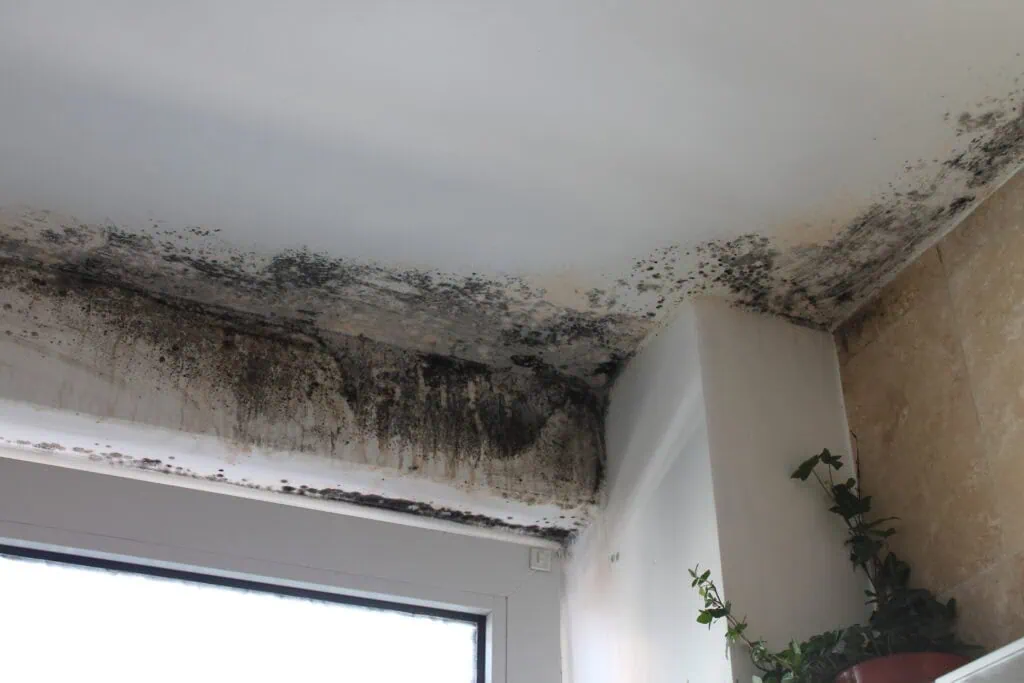
- Sight. Look at the bottom 18 inches of every wall, the ceilings under bathrooms, the underside of any wood trim near plumbing, and inside HVAC closets. Stains, lifted paint, and any black or grey speckling go on your list.
- Touch. Press a hand against suspect drywall and trim. Cool-but-firm is fine; cool-and-soft is wet. Carpet and pad in basements should not feel cold and dense — that means moisture in the pad.
If you have a moisture meter, the threshold for action on drywall is roughly 1 percent above the reference dry value. On wood, anything over 16 percent in a structural member calls for further investigation.
Clean it yourself versus call a remediator
You can safely clean small surface mold growth — under about 10 square feet, on a non-porous material, with a known and stopped moisture source. Soap, water, and dry-down is enough.
Anything more should go to a remediator with proper containment, HEPA filtration, and post-remediation verification:
- Visible growth covering more than 10 square feet
- Mold inside wall cavities, under flooring, or in HVAC components
- Anyone in the household with respiratory sensitivity, immunosuppression, or asthma
- Any short-term-rental property where guest disclosures are a concern
Insurance and rental disclosure considerations
Most Colorado homeowners policies cover mold remediation only when it results from a covered water-damage event documented within a reasonable window — typically 14 days. Pre-existing or long-term moisture damage is usually excluded. The earlier you document and call, the cleaner the claim.
For rental properties, Colorado does not have a statewide mold disclosure statute, but local Vail and Avon ordinances and your platform terms (Airbnb, VRBO) may require disclosure of known indoor air-quality issues. Document what you find and what was remediated.
If your Vail property has been closed since ski season, our team can do a pre-summer inspection that pairs well with your seasonal turnover. See how we serve Vail or request an inspection.
Why DRS for Vail Valley Properties
Local mountain team
Crews based in Eagle County who know how snowmelt, freeze-thaw cycles, and vacation-home patterns drive damage in the Vail Valley.
24/7 dispatch
Emergency response any hour, any day. We mobilize to stabilize, mitigate, and document damage as soon as we arrive on site.
Insurance documentation
Photos, moisture readings, scope of work, and reports your adjuster needs to move the claim forward without delays.
Core Restoration Services
Water, fire, smoke, and mold restoration for homes, condos, rentals, and mountain properties throughout the Vail Valley and Eagle County.
Emergency Services
Emergency response, damage stabilization, and fast dispatch when a property loss cannot wait.
View serviceWater Damage Restoration
Water extraction, structural drying, moisture monitoring, and mitigation after leaks, pipe bursts, and flooding.
View serviceFire Restoration
Cleanup for smoke, soot, and fire-related damage with a clear path from emergency response to reconstruction planning.
View serviceMold Restoration
Targeted mold remediation and moisture control to protect indoor air quality and reduce recurrence.
View serviceAreas We Serve
Tap a town to see local restoration support, common issues we see in the area, and how to reach DRS fast.
Frequently Asked Questions
Can I open my Vail vacation home myself if I suspect mold?
Yes, but limit your exposure. Wear an N95 or P100 respirator, open exterior doors and windows for cross-ventilation, and avoid disturbing visible growth. Take photos before touching anything and call for a professional inspection before deeper cleaning.
How quickly can DRS inspect a vacation home in Vail?
Most Vail inspections are scheduled within 24 to 48 hours during shoulder season. For active water events with mold risk, we dispatch the same day.
Is mold testing necessary, or can you just remediate what you see?
For visible growth on accessible surfaces, identification of the species is rarely necessary before remediation — the response is the same. We recommend post-remediation verification testing for properties where guest disclosure or insurance documentation matters.
Will running a dehumidifier solve a mold problem on its own?
No. Dehumidification helps reduce future risk, but it does not remove existing mold colonies, contaminated materials, or hidden moisture sources. Treat the source, remove affected materials, then control humidity going forward.
Get 24/7 Mold Help in Vail
Call DRS for pre-summer mold inspections, remediation, and post-remediation verification across Vail and Eagle County.